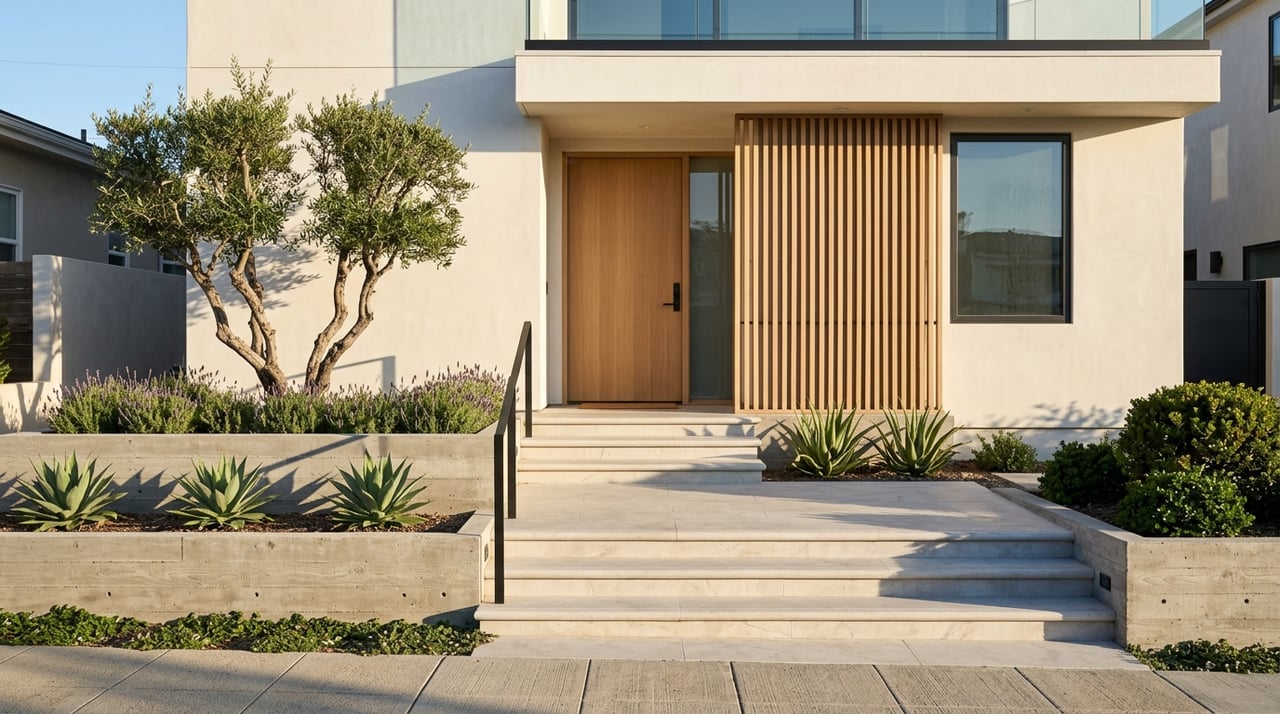
Corona Del Mar Village Vs. The Hills: How To Choose
If you are torn between Corona del Mar Village and the hills, you are asking the right question. These two parts of Corona del Mar can offer very different day-to-day experiences, even though they share the same coastal zip code and luxury appeal. The key is not which area is "better," but which one fits how you want to live, move through your day, and use your home. Let’s break it down.
In Corona del Mar, the Village generally refers to the Flower Streets grid. The Corona del Mar Residents Association divides the Village into five geographic sections, and the City of Newport Beach keeps separate Village and Irvine Terrace maps in its GIS catalog.
When people say "the hills," they are usually talking about the elevated pockets above or inland from the Village rather than one official neighborhood name. In practical buyer shorthand, that often includes areas such as Harbor View Hills and Irvine Terrace, along with other elevated marine-terrace and San Joaquin Hills locations.
If daily walkability is high on your list, the Village usually stands out. Corona del Mar’s downtown village sits a few blocks inland from the beach and clusters shops, boutiques, restaurants, and Sherman Library and Gardens in one compact area.
The City of Newport Beach also highlights walkability in this part of Corona del Mar. The Corona Del Mar Loop walk runs through part of the Flower Streets and includes ocean views from Ocean Boulevard, with paved paths and several street crossings along the way.
This is the kind of setting that can support a more compact coastal routine. If you like the idea of walking to coffee, heading to dinner without getting in the car, or reaching the beach with less planning, the Village often aligns with that lifestyle.
The hills and terrace pockets tend to feel more residential first. These elevated areas are often chosen by buyers who want quieter streets, more privacy, and stronger view orientation.
That difference shows up in how these homes are commonly marketed and how the areas function day to day. While the Village is tied more closely to the commercial core, elevated neighborhoods are more often associated with larger lots, wider streets, and panoramic outlooks that can include ocean, harbor, Catalina, and city-light views.
If your ideal home life centers on a calmer setting, a larger parcel, or a more tucked-away feel, the hills may be the better fit. You may drive more often, but many buyers see that as a worthwhile trade for privacy and space.
For most buyers, the biggest decision comes down to walkability versus privacy. The Village gives you easier access to shops, dining, beach-close activity, and a livelier street rhythm.
The hills and terraces usually give you a quieter residential setting with more separation from the commercial core. That can mean less foot traffic, fewer day-to-day street interactions, and a stronger sense of retreat at home.
Neither choice is right for everyone. It depends on whether you want your neighborhood energy just outside your door or whether you would rather come home to a more insulated setting.
The Village tends to offer a broader mix of property types. Recent examples along the Orchid corridor include detached rear residences, townhouses, cottages, duplexes, and new-construction condos.
That mix can create more flexibility depending on your goals. You may find a lower-maintenance option, a lock-and-leave setup, or a smaller footprint that lets you prioritize location over lot size.
For some buyers, that trade makes perfect sense. If being close to the beach, restaurants, and everyday conveniences matters more than having a large yard or expansive setbacks, Village inventory may feel more aligned.
The hills and terraces tend to skew toward larger single-family homes. Recent examples include single-story homes on sizable lots, single-level mid-century properties, new-construction residences above 5,000 square feet, and custom estates on parcels larger than 16,000 square feet.
These areas often appeal to buyers who want more house, more lot, or more flexibility in how the property lives. Features such as courtyards, pools, broad terraces, and low-profile layouts show up more often in these elevated settings.
If single-level living matters to you, or if you want more outdoor space and a more substantial homesite, the hills may offer stronger options. That is especially true if you are comparing them to the Village’s more compact building patterns.
Recent examples suggest a useful pricing pattern, though it is not a hard rule. Flower Streets homes often appear from the high $1 million range into the low $3 million range.
By contrast, hills and terrace homes with strong views often land from the mid $4 million range into the $10 million to $14 million-plus range, especially for larger view properties and new construction. Front-row Ocean Boulevard properties can exceed $20 million, which shows how exact frontage and view quality can outweigh pocket labels.
This matters because two homes in Corona del Mar may feel close on a map but differ sharply in value based on elevation, lot size, view line, and home type. If you are building a search strategy, it helps to define which of those variables matters most before you start touring.
Before you choose between the Village and the hills, it helps to get specific about your routine. A clear answer on lifestyle can save you time and narrow your search more effectively than square footage alone.
Ask yourself:
These questions can quickly reveal which side of Corona del Mar fits your priorities. Often, the answer becomes clear when you focus on how you want a normal Tuesday to feel, not just how a home looks in photos.
A practical way to think about it is this: the Village usually fits buyers who want a compact coastal lifestyle with strong walkability. The hills and terraces usually fit buyers who prioritize views, lot size, and a more residential feel.
There is one major exception. In the ultra-premium waterfront and bluff segment, exact frontage and view quality can matter more than whether a property is technically in the Village or in an elevated pocket.
That is why a smart home search in Corona del Mar should go beyond labels. You want to compare how each property lives, how the location supports your routine, and how the premium you pay lines up with the features you value most.
If you want help weighing Village walkability against hillside privacy, view value, and long-term fit, David Espino can help you compare your options with clear local insight and tailored guidance.
Stay up to date on the latest real estate trends.
Working with David Espino means partnering with a proven Orange County expert known for delivering exceptional results in the luxury market. With nearly a decade of experience and over $110M in sales, he combines strategic pricing, high-impact marketing, and skilled negotiation to help clients move forward with confidence.
DAVID ESPINO | CA DRE# 02014458
COLDWELL BANKER REALTY | CA DRE# 00616212
[email protected]
(949) 547-5181
ADDRESS 840 Newport Center Dr Ste 100 Newport Beach, CA 92660